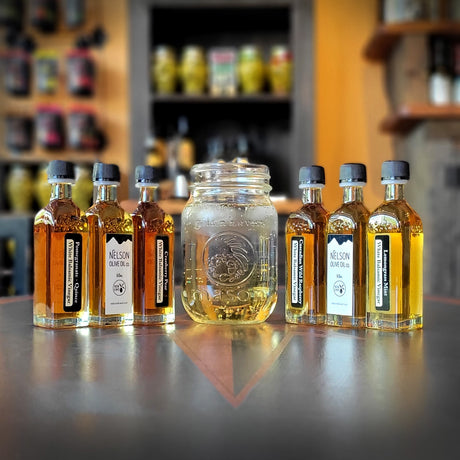
Here you will find our infused white and dark balsamics, perfect for crafting delicious mocktails, or replacing sugar-loaded sodas. Of course, these balsamics are also excellent for salad vinaigrettes, marinades, bread dipping, desserts, and more!
More Info
Citrus and Herb White Balsamics Add Zesty Brightness
Sicilian Lemon White Balsamic carries a sharp, sunny acidity that lifts heavier dishes without adding sweetness. Key Lime White Balsamic leans tarter and more tropical, working well anywhere a squeeze of fresh lime would normally go. Cara Cara Orange Vanilla White Balsamic softens citrus tang with a rounder, vanilla-tinged sweetness not found in the sharper lemon and lime options above.
Thai Lemongrass Mint Brings a Herbal Edge
Thai Lemongrass Mint White Balsamic stands apart from the citrus group with a cooling, herbal character instead of pure acidity. Thai Lemongrass Mint White Balsamic works well in dressings for noodle salads or as a splash over grilled seafood. Home cooks looking for something beyond straightforward citrus tang often reach for Thai Lemongrass Mint White Balsamic first.
Stone Fruit and Berry White Balsamics Balance Sweetness
Ripe Peach White Balsamic carries a soft, rounded sweetness suited to summer produce and light vinaigrettes. Cascadian Wild Raspberry White Balsamic brings a sharper berry tang, better suited to cutting through rich or fatty dishes. Cranberry-Pear White Balsamic pairs tart cranberry with mellow pear, giving Cranberry-Pear White Balsamic more balance than a straight berry flavor.
Tropical and Orchard Fruit Balsamics
Blenheim Apricot White Balsamic offers a concentrated stone fruit flavor with less acidity than Ripe Peach White Balsamic. Alfoos Mango White Balsamic leans tropical and syrupy, standing apart from the orchard fruit flavors nearby. Golden Pineapple White Balsamic finishes the group with a bright, slightly tangy sweetness that suits glazes and cold drinks equally well.
Warm and Floral White Balsamics Add Depth
Honey Ginger White Balsamic combines warm spice with natural sweetness, giving Honey Ginger White Balsamic more depth than the fruit-forward balsamics nearby. Pomegranate-Quince White Balsamic pairs tart pomegranate with a softer quince background, landing between the sharp berries and the mellow orchard fruits above. Coconut White Balsamic brings a rounder, more dessert-leaning sweetness suited to baking as easily as savory glazes.
Elderflower Rounds Out the Floral Side
Elderflower White Balsamic offers a light floral note that sets Elderflower White Balsamic apart from the spice and fruit flavors in the rest of the collection. Elderflower White Balsamic works well in sparkling drinks or drizzled over fresh melon and other mild fruit. Cooks who want something less sweet and more aromatic often choose Elderflower White Balsamic over the fruit-heavy options.
Dark Balsamic Vinegars Bring Bold, Rich Sweetness
Blackberry Ginger Dark Balsamic pairs deep berry flavor with warm spice, giving Blackberry Ginger Dark Balsamic more complexity than a single-fruit dark balsamic. Black Cherry Dark Balsamic leans richer and less tart, closer to a dessert glaze than a sharp vinaigrette base. Pomegranate Dark Balsamic keeps more acidity than Black Cherry Dark Balsamic, making Pomegranate Dark Balsamic a better match for cutting through fatty meats.
Raspberry Dark Balsamic Brings Bright Tang
Raspberry Dark Balsamic brings a brighter, more tart profile than the other dark balsamics in this collection. Raspberry Dark Balsamic works well reduced into a glaze for grilled meats or drizzled over dark chocolate desserts. The four dark balsamics all carry more body and natural sweetness than the white balsamic flavors above, since dark balsamic starts from a more concentrated grape must.
How Balsamic Vinegar Takes On Fruit and Herb Flavor
Balsamic vinegar starts as reduced grape must, which is then aged to develop the vinegar's characteristic sweetness and acidity. Dark balsamic vinegars typically use a longer aging process, which builds the deeper color and richer body found in options like Black Cherry Dark Balsamic and Pomegranate Dark Balsamic. White balsamic vinegars use a lighter grape must and a shorter aging process, keeping the color pale and the flavor brighter, as seen in Sicilian Lemon White Balsamic and Ripe Peach White Balsamic.
Adding Fruit and Herb Flavor After Aging
Once the base balsamic vinegar is ready, natural fruit, herb, or spice flavoring is blended in to create infused varieties like Honey Ginger White Balsamic and Blackberry Ginger Dark Balsamic. Adding flavor after aging lets the vinegar's own acidity carry the taste rather than mask the taste. Read more about what balsamic vinegar is and how it's made for a fuller breakdown of the process, or check the balsamic vinegar frequently asked questions page for common production and use questions.
Ways to Use and Choose an Infused Balsamic
Infused balsamic vinegars work well beyond a simple salad dressing. Cranberry-Pear White Balsamic and Pomegranate Dark Balsamic both work as a quick glaze for roasted vegetables or grilled meat, needing only a light reduction over low heat to thicken. A splash of Sicilian Lemon White Balsamic or Golden Pineapple White Balsamic mixed with sparkling water and ice makes a refreshing mocktail in under a minute, similar to the balsamic shrub drink recipes found elsewhere on the site. For desserts, Coconut White Balsamic or Black Cherry Dark Balsamic can be drizzled straight over fruit or ice cream without extra preparation. Browse the balsamic vinegar recipe ideas for home cooks for more inspiration.
Choosing White or Dark Balsamic Flavors
White balsamic flavors suit lighter dishes, drinks, and desserts where a darker vinegar would overpower the other ingredients. Dark balsamic flavors suit heartier dishes, glazes, and marinades that can stand up to a bolder, sweeter profile. Shoppers who want to sample several flavors before committing to a full bottle can look at variety packs like the "Fab 4" White Balsamic Variety Pack or the "Dark 4" Balsamic Shrub Pack, both listed in this collection.
Quick Ways to Use Infused Balsamic Vinegar
- Whisk with olive oil for an instant vinaigrette on any green salad.
- Reduce over low heat for a glaze on roasted vegetables or grilled meat.
- Mix with sparkling water for a low-sugar mocktail base.
- Drizzle straight over fruit, cheese, or ice cream as a simple dessert finish.


 From $1700Unit price
 From $1700Unit price